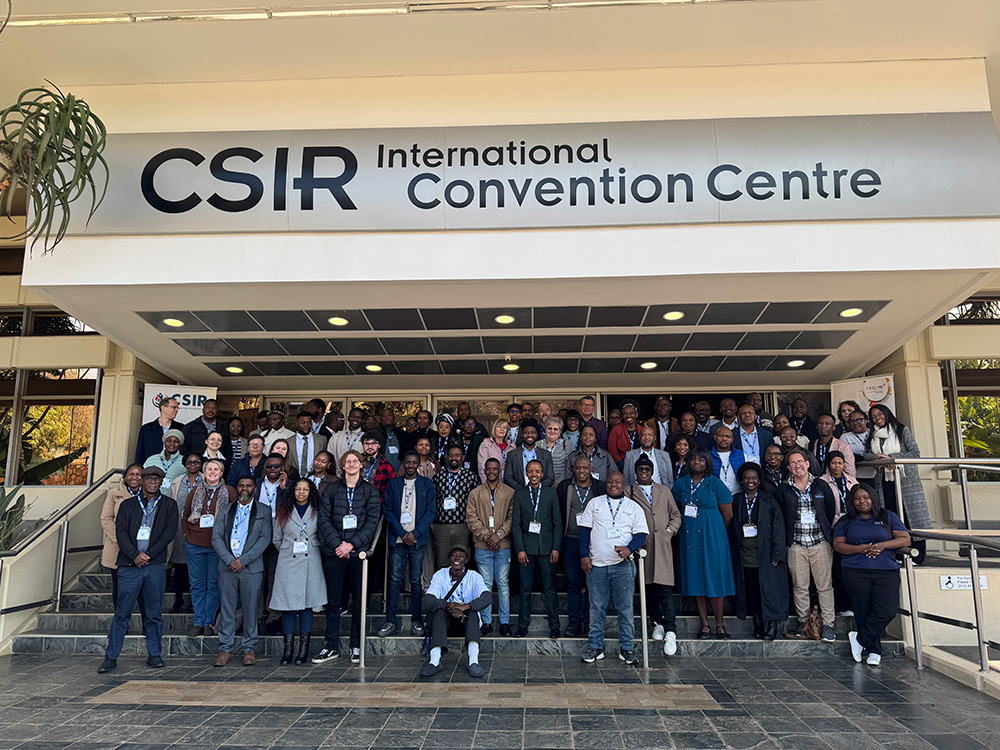
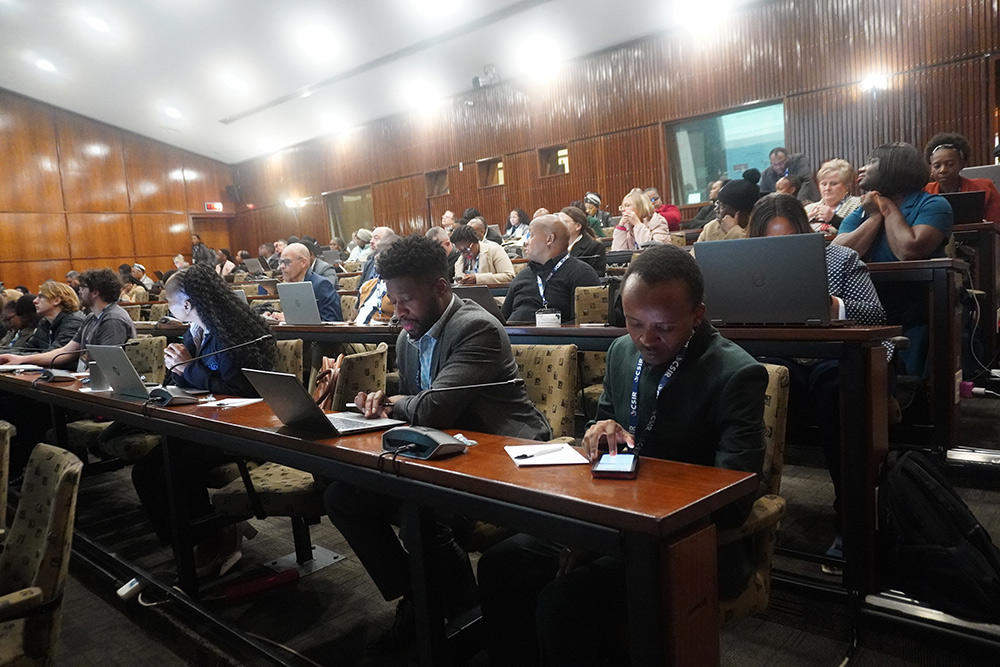
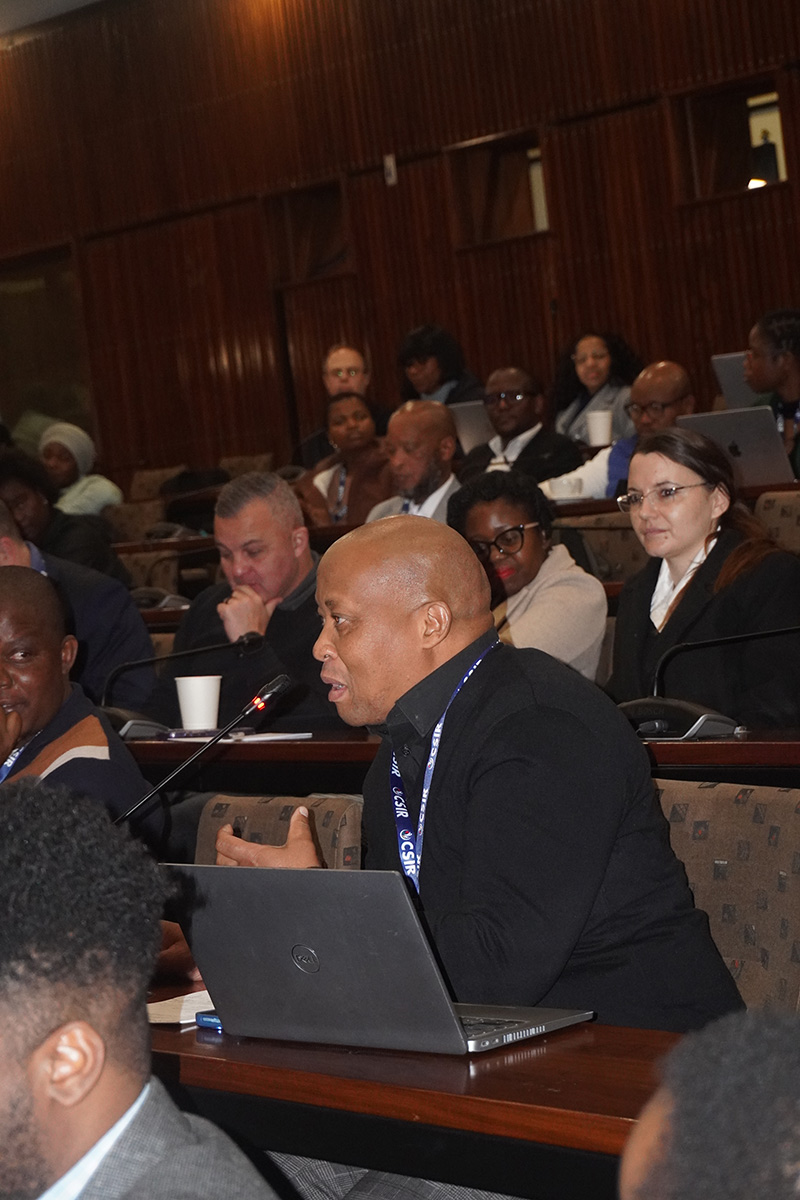
The eighth Annual Data Intensive Research Initiative of South Africa (DIRISA) National Research Data Workshop is officially underway at the CSIR International Convention Centre (CSIR ICC) in Pretoria, taking place on 1 and 2 July 2026.
Hosted under the theme “Enhancing Technologies for Data-Driven Development for Africa,” the two-day event aims to propel data-intensive research and foster an enhanced comprehension of research data management and open science. The workshop maintains a keen focus on leveraging data and open science to augment the quality of life in South Africa and the broader African continent.
Key discussion themes:
Digital resilience: Africa’s current stance on digital transformation, data infrastructure, data security, data sovereignty and systemic cyber resilience.
Inclusive economic development: The direct impact of data literacy and data sovereignty on African economic growth.
Public-private partnerships: The underlying pros and cons of sharing data through collaborative partnerships between the private and public sectors.
For more information and updates, visit the official DIRISA website.
Forty provincial educational specialists responsible for the robotics and coding subject from eight provinces are attending the Department of Science, Technology and Innovation’s (DSTI) Coding and Robotics Workshop at the Centre for High Performance Computing (CHPC) in Cape Town. The training runs from 23 – 27 March 2026.
A bit of context
The workshop forms part of a three-year contract awarded to the CHPC by the DSTI to deliver training workshops in support of implementing the new coding and robotics curriculum for the Department of Basic Education (DBE).
The official launch of the curriculum followed a phased timeline of approval, piloting and formal gazetting. The reconceptualised Curriculum and Assessment Policy Statement (CAPS) was endorsed by Umalusi for full rollout in the Foundation Phase starting in 2025. Extensive piloting has taken place in more than 1 500 public schools across all nine provinces to test the draft curriculum for Grades R – 9.
The new curriculum aims to prepare learners for science, technology, engineering, arts and mathematics (STEAM) careers by fostering:
Computational thinking: Solving complex problems through logic;
Design thinking: Creating human-centred solutions and encouraging innovation; and
Digital citizenship: Understanding the societal impact of technology and promoting ethical usage.
The hands-on programme covers:
Day one: Scratch programming fundamentals and computational thinking
Day two: Advanced Scratch and classroom integration (lesson plans, classroom activity templates and assessment strategies)
Day three: Physical computing with Arduino using Scratch for Arduino
Day four: Robotics (building a robotic arm project) and Community Code Club coordination
Day five: Introduction to Micro:bit and DBE curriculum integration planning
Upon completion, participants will be able to:
Teach foundational coding and robotics concepts to students;
Integrate coding and robotics into existing DBE curriculum subjects; and
Independently run similar workshops in their provinces, districts and schools.
Why training provincial subject advisors matters
The CHPC has recently completed a similar three-year robotics and coding contract with the DSTI during the planning and piloting phase of the new curriculum, “Training educational sepcialists is a critical step in the DSTI’s strategy because they serve as the primary bridge between national policy and classroom practice. They are responsible for training teachers in their respective districts,” said Koki Selepe, Deputy Director: Science Promotion at the DSTI.
In the previous contract, a cohort of 220 trainees were successfully trained and is now equipped to establish coding and robotics programmes and initiatives in their respective regions. This demonstrates the effectiveness of the train-the-trainer model used in the programme.
“They ensure that the new CAPSis correctly interpreted and implemented uniformly across all schools, preventing misconceptions,” said Mthetho Sovara, senior research support scientist and project lead for the Coding and Robotics Workshop.
The Centre for High Performance Computing (CHPC) invites applications from suitably qualified candidates to participate in the CHPC Student Cluster Competition. This competition provides undergraduate students at South African universities with valuable exposure to the high-performance computing industry. The winning team stands a chance to compete in the International Supercomputing Conference (ISC) Student Cluster Competition, hosted at the 2027 ISC in Germany.
Registration is open to South African students enrolled in a science, technology, engineering and mathematics-related degree who are in their second year of a three-year degree or in their second or third year of a four-year degree.
The selection round is designed to equip participants with the essential knowledge required to build a computing cluster. This includes hands-on experience with Linux systems, an understanding of the fundamental software stack used in clusters and learning the principles of high-performance computing. Performance in the various assessments conducted during this round will determine which teams advance to the national competition.
Teams that progress to the national round will build small HPC clusters on the exhibition floor at the CHPC National Conference. Participants will be given a selection of benchmarks and applications to optimise and run on their clusters.
The CHPC will cover accommodation costs for all events, as well as travel to the venue and conference fees, where applicable.
The Centre for High Performance Computing (CHPC) team that participated in the international Student Cluster Competition at the ISC25 Conference held from 10-12 June 2025 in Hamburg, Germany, has secured second place overall in the online component of the competition, defeating 21 other university teams across the globe.
The placement was announced at the awards ceremony on 12 June 2025.
This fantastic result shows that the team, made up of four Cape Peninsula University of Technology (CPUT) students, one student from the University of the Western Cape (UWC) and one student from the University of the Witwatersrand (WITS), was a force to be reckoned with while competing against many other international teams! The CHPC student teams have previously won this competition and have defended the trophy on several occasions. The centre is renowned for bringing fierce contenders on the high-performance computing stage.
The CHPC team entered the competition with a 3-node high-performance computing cluster sponsored by Hewlett-Packard Enterprise, featuring Intel central processing units and NVIDIA graphics cards, along with Aruba and NVIDIA networks.
Team CHPC members are:
Kapil Ramlall (Wits, Electrical Engineering);
Thina Calana (CPUT, Computer Engineering);
Lisa Pitsi (University of the Western Cape, Computer Science);
Tebogo Diraditsile (CPUT, Computer Engineering);
Allen Van Dieman (CPUT, Computer Engineering);
Abdullah Jaffer (CPUT, Computer Engineering); and
Anna Lukose (University of Cape Town, Electrical and Computer Engineering and an incredibly supportive reserve)
The Centre for High Performance Computing has extended the registration deadline for its Student Cluster Competition’s (SCC) selection round. Teams now have until 17:00 on Friday, 25 April 2025 to complete their registrations.
All successful teams will be notified no later than Wednesday, 7 May 2025.