Author: Rudolph Ruds

Registration Opens for the 2027 CHPC/NITheCS Coding Summer School on Data Science and Machine Learning

Registration Opens for the 2027 CHPC/NITheCS Coding Summer School on Data Science and Machine Learning

Registration is officially open for the 17th CHPC & 9th NITheCS Coding Summer School (CSS). Scheduled from 25 January to 5 February 2027, this intensive program trains researchers, postgraduates, and industry professionals across South Africa in cutting-edge data science and machine learning methodologies.

Jointly hosted by the Centre for High Performance Computing and the National Institute for Theoretical and Computational Sciences, the free hybrid program runs weekdays from 25 January to 5 February 2027, covering core data science workflows and machine learning fundamentals.

Program Overview

  • Format: Hybrid delivery combining online lectures with mandatory in-person participation at designated regional nodes (Monday–Friday, 09:30 – 16:00)
  • Curriculum: Week 1 focuses on data science tools and AI integration, while Week 2 covers computational thinking, statistics, and machine learning
  • Eligibility: Aimed at South African postgraduates, final-year undergraduates, and industry researchers with a basic Python background, requiring completion of a mandatory online entrance test

Registration Details

  • Deadline: 15 December 2026 at 12:00
  • How to Apply: Applications are submitted via the Indico Global CSS registration page  https://indico.global/event/19355/ (space is limited).

For further details and updates, visit the Official CHPC Coding Summer School Hub. For general inquiries please submit a ticket here: https://chpc.freshdesk.com/support/tickets/new  and choose the “Coding Summer School” category.

Important user notice: CHPC transitions to new HPC system from 1 December 2026

Important user notice: CHPC transitions to new HPC system from 1 December 2026

Dear CHPC User,

The Centre for High Performance Computing (CHPC) is preparing a major upgrade of its national high-performance computing infrastructure, with the current Lengau system being replaced by a new High-Performance Computing (HPC) system.

This upgrade is intended to provide users with enhanced computing and a more modern and reliable HPC environment. To enable the transition, the Lengau cluster will be shut down from 1 December 2026, followed by the refurbishment of the CHPC data centre and the installation, testing and commissioning of the new system.  

What this means for users:

The transition is currently planned to take three to four months:  

  • 1 December 2026: Lengau HCP will be shut down;
  • December 2026 to March 2027 (exact date to be confirmed): Data centre renovation and installation, integration, testing and commissioning of the new HPC system.
  • March 2027 (exact date to be confirmed): Target date for the new HPC service to be available to users.   

Please note that no HPC services will be available at the CHPC during the three to four month period from 1 December 2026 to March 2027 (exact date to be confirmed). This interruption will affect all HPC services, including access to the Lustre parallel file system and the GPU compute nodes.

The dates above represent the current implementation schedule. The CHPC will keep users informed of progress and advise promptly should there be any changes to the anticipated service-restoration date.

Important: Data migration and backup requirements

The new HPC system will use a new parallel file system. Consequently, data stored on the current Lengau Lustre file system will therefore no longer be accessible once the Lengau cluster is shut down on 1 December 2026.

All users are requested to transfer or back up all important data currently stored on the Lengau Lustre file system by 27 November 2026. We strongly encourage users not to wait until the final days before the shutdown to begin this process.

Further guidance and technical support will be provided to assist users in preparing for the transition.

Planning your research and computational work

We recognise that an interruption of this duration will significantly affect users’ research programmes and ongoing computational work that depend on the CHPC infrastructure. We are therefore communication the transition in advance to give users enough time to plan accordingly to minimise potential disruption.

The transition is an important step towards providing an improved HPC environment, with the new system expected to offer enhanced computing capabilities and more reliable services once it becomes operational and available to users.

The CHPC will provide regular updates on the progress of the transition, including any changes to the planned timeline and further information regarding the deployment of the new HPC system.

We appreciate your cooperation and patience as we undertake this significant upgrade of South Africa’s high-performance computing infrastructure.

Follow this link to Frequently Asked Questions (FAQs) for more information.

If you know of users that are not receiving this communication email, please request them to subscribe to the CHPC mailing list here:

https://lists.chpc.ac.za/sympa/info/chpc-users

For queries or assistance, please contact CHPC Help Desk at:

helpdesk@chpc.ac.za

Kind regards

The CHPC team

Eighth Annual DIRISA National Research Data Workshop underway at CSIR ICC

Eighth Annual DIRISA National Research Data Workshop underway at CSIR ICC

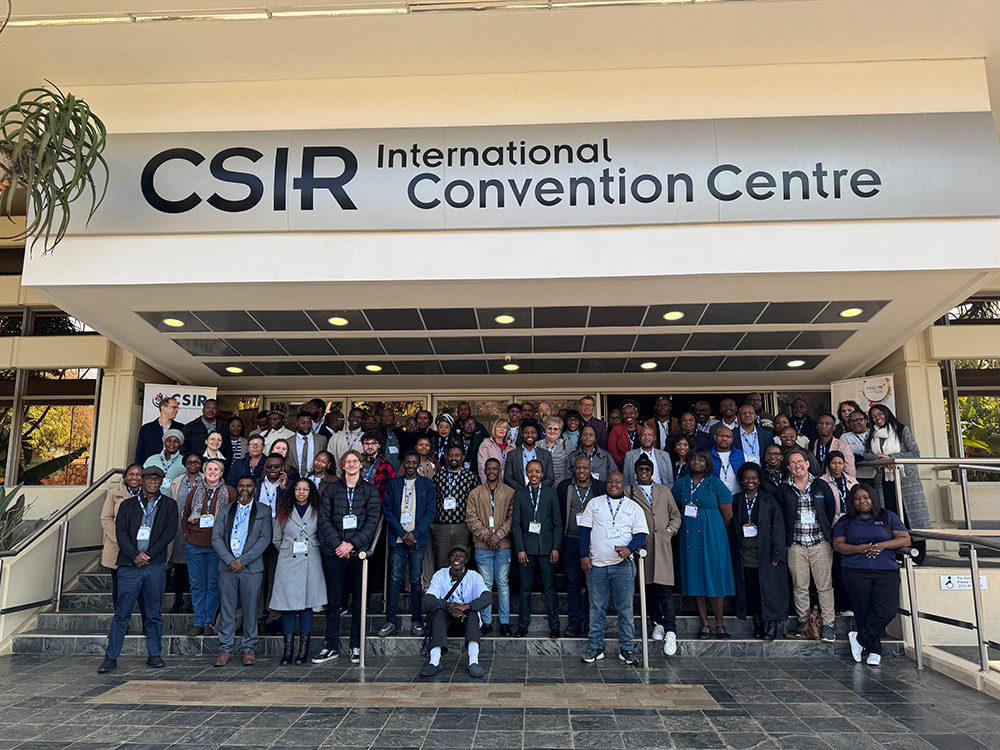
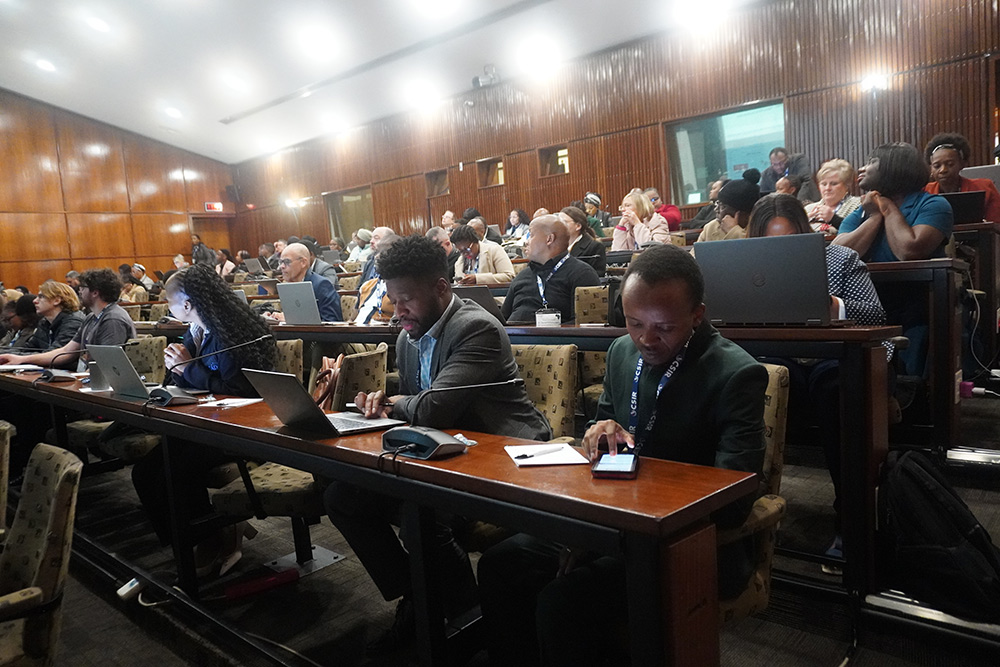
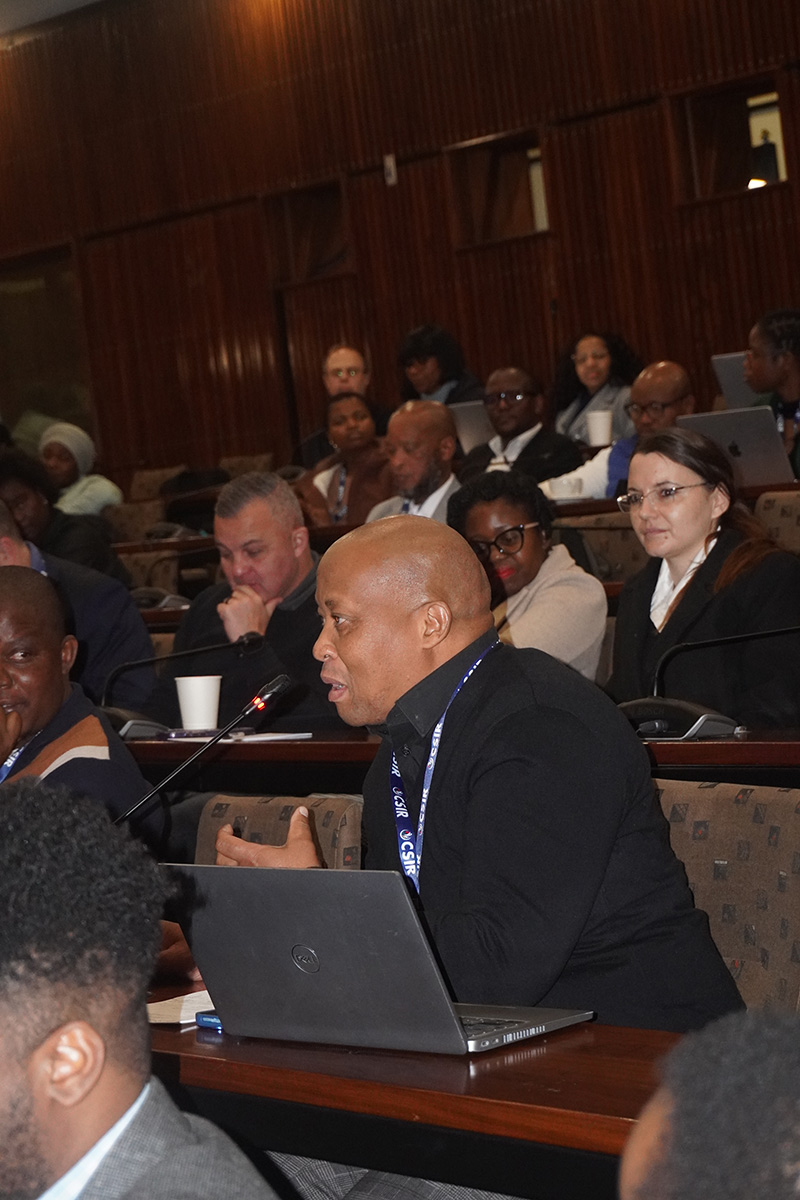
The eighth Annual Data Intensive Research Initiative of South Africa (DIRISA) National Research Data Workshop is officially underway at the CSIR International Convention Centre (CSIR ICC) in Pretoria, taking place on 1 and 2 July 2026.

Hosted under the theme “Enhancing Technologies for Data-Driven Development for Africa,” the two-day event aims to propel data-intensive research and foster an enhanced comprehension of research data management and open science. The workshop maintains a keen focus on leveraging data and open science to augment the quality of life in South Africa and the broader African continent.

Key discussion themes:

  • Digital resilience: Africa’s current stance on digital transformation, data infrastructure, data security, data sovereignty and systemic cyber resilience.
  • Inclusive economic development: The direct impact of data literacy and data sovereignty on African economic growth.
  • Public-private partnerships: The underlying pros and cons of sharing data through collaborative partnerships between the private and public sectors.

For more information and updates, visit the official DIRISA website.

CHPC facilitates rollout of the new national coding and robotics curriculum

CHPC facilitates rollout of the new national coding and robotics curriculum

Forty provincial educational specialists responsible for the robotics and coding subject from eight provinces are attending the Department of Science, Technology and Innovation’s (DSTI) Coding and Robotics Workshop at the Centre for High Performance Computing (CHPC) in Cape Town. The training runs from 23 – 27 March 2026.

A bit of context

The workshop forms part of a three-year contract awarded to the CHPC by the DSTI to deliver training workshops in support of implementing the new coding and robotics curriculum for the Department of Basic Education (DBE).

The official launch of the curriculum followed a phased timeline of approval, piloting and formal gazetting. The reconceptualised Curriculum and Assessment Policy Statement (CAPS) was endorsed by Umalusi for full rollout in the Foundation Phase starting in 2025. Extensive piloting has taken place in more than 1 500 public schools across all nine provinces to test the draft curriculum for Grades R – 9.

The new curriculum aims to prepare learners for science, technology, engineering, arts and mathematics (STEAM) careers by fostering:

  • Computational thinking: Solving complex problems through logic;
  • Design thinking: Creating human-centred solutions and encouraging innovation; and
  • Digital citizenship: Understanding the societal impact of technology and promoting ethical usage.

The hands-on programme covers:

  • Day one: Scratch programming fundamentals and computational thinking
  • Day two: Advanced Scratch and classroom integration (lesson plans, classroom activity templates and assessment strategies)
  • Day three: Physical computing with Arduino using Scratch for Arduino
  • Day four: Robotics (building a robotic arm project) and Community Code Club coordination
  • Day five: Introduction to Micro:bit and DBE curriculum integration planning

Upon completion, participants will be able to:

  • Teach foundational coding and robotics concepts to students;
  • Integrate coding and robotics into existing DBE curriculum subjects; and
  • Independently run similar workshops in their provinces, districts and schools.

Why training provincial subject advisors matters

The CHPC has recently completed a similar three-year robotics and coding contract with the DSTI during the planning and piloting phase of the new curriculum, “Training educational sepcialists is a critical step in the DSTI’s strategy because they serve as the primary bridge between national policy and classroom practice. They are responsible for training teachers in their respective districts,” said Koki Selepe, Deputy Director: Science Promotion at the DSTI.

In the previous contract, a cohort of 220 trainees were successfully trained and is now equipped to establish coding and robotics programmes and initiatives in their respective regions. This demonstrates the effectiveness of the train-the-trainer model used in the programme.

“They ensure that the new CAPSis correctly interpreted and implemented uniformly across all schools, preventing misconceptions,” said Mthetho Sovara, senior research support scientist and project lead for the Coding and Robotics Workshop.

Registrations are open for the CHPC Student Cluster Competition selection round

Registrations are open for the CHPC Student Cluster Competition selection round

The Centre for High Performance Computing (CHPC) invites applications from suitably qualified candidates to participate in the CHPC Student Cluster Competition. This competition provides undergraduate students at South African universities with valuable exposure to the high-performance computing industry. The winning team stands a chance to compete in the International Supercomputing Conference (ISC) Student Cluster Competition, hosted at the 2027 ISC in Germany.

Registration is open to South African students enrolled in a science, technology, engineering and mathematics-related degree who are in their second year of a three-year degree or in their second or third year of a four-year degree.

The selection round is designed to equip participants with the essential knowledge required to build a computing cluster. This includes hands-on experience with Linux systems, an understanding of the fundamental software stack used in clusters and learning the principles of high-performance computing. Performance in the various assessments conducted during this round will determine which teams advance to the national competition.

Teams that progress to the national round will build small HPC clusters on the exhibition floor at the CHPC National Conference. Participants will be given a selection of benchmarks and applications to optimise and run on their clusters. 

The CHPC will cover accommodation costs for all events, as well as travel to the venue and conference fees, where applicable.

Please visit https://events.chpc.ac.za/e/scc26sr  and complete the online application form no later than 17:00 on 3 May 2026.

Commences: 5 July 2026 at 08:00

Ends: 12 July 2026 at 17:30

For more information, please send an email to: scc.chpc@csir.co.za